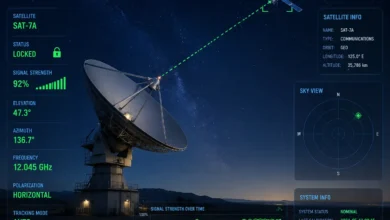
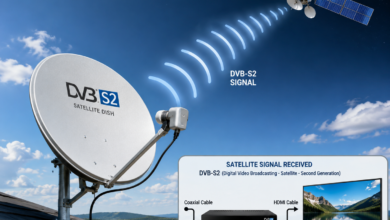
Satellite Broadcasting: How It Works and Why It Still Powers Global Entertainment

In a world dominated by streaming apps and fiber internet, many people assume satellite broadcasting is becoming outdated. But the reality is very different.
From live football matches and international news coverage to remote education and emergency communication systems, satellite broadcasting continues to power some of the most important media infrastructure on the planet. In fact, millions of homes still rely on satellite signals every single day for television, radio, and internet access.
The fascinating part? Most viewers never stop to think about how these signals travel thousands of kilometers through space before landing directly on a dish installed on a rooftop.
Whether you’re a curious beginner, a satellite TV enthusiast, or someone exploring broadcasting technology, this guide breaks down everything you need to know about satellite broadcasting in a simple and engaging way.
What Is Satellite Broadcasting?
Satellite broadcasting is the process of transmitting television, radio, or data signals through communication satellites orbiting the Earth.
Instead of sending signals only through terrestrial towers or cable networks, broadcasters upload signals to satellites positioned in space. These satellites then retransmit the signals across massive geographic areas.
This technology allows channels to reach:
- Entire countries
- Multiple continents
- Rural and remote locations
- Ships and airplanes
- Areas with limited internet infrastructure
That’s why satellite broadcasting remains one of the most reliable ways to distribute media globally.
How Satellite Broadcasting Works
At first glance, the process may sound complicated, but the concept is surprisingly straightforward.
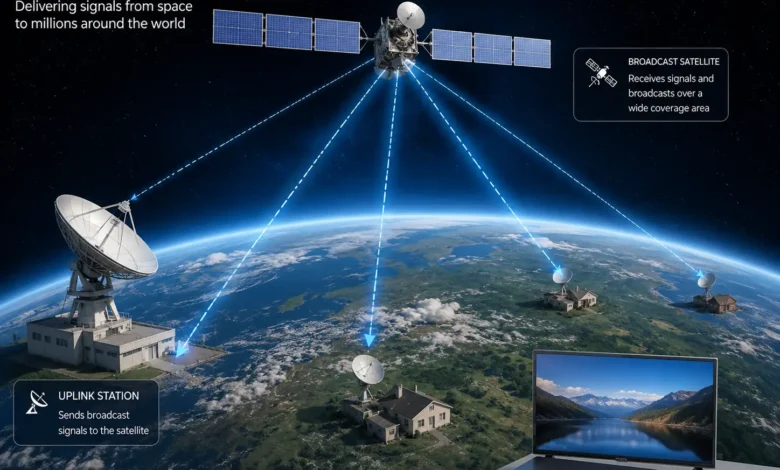
Here’s a simplified breakdown of how satellite broadcasting works:
1. Content Is Produced
TV stations, sports networks, or radio broadcasters create content in studios or live event locations.
This could include:
- News broadcasts
- Sports events
- Movies and TV shows
- Educational programs
- Music channels
2. Signals Are Sent to an Uplink Station
The content is transmitted to a ground-based uplink station using high-powered antennas.
The uplink station sends the signal toward a communication satellite orbiting Earth.
3. The Satellite Receives the Signal
The satellite receives the signal using onboard transponders.
These transponders amplify and convert the signal before sending it back to Earth.
4. Viewers Receive the Signal
Homes equipped with satellite dishes and receivers capture the signal.
The receiver decodes the broadcast and displays it on the television or radio device.
The entire process happens in seconds.
Types of Satellite Broadcasting
Satellite broadcasting isn’t limited to TV channels alone. The technology supports several types of communication services.
Direct-to-Home (DTH) Broadcasting
This is the most common form of satellite TV.
Signals are transmitted directly to viewers without needing cable infrastructure.
Popular DTH providers include:
DTH broadcasting is especially popular in regions where cable networks are limited.
Satellite Radio Broadcasting
Satellite radio allows audio channels to cover huge geographic regions with consistent quality.
It’s commonly used in:
- Cars
- Commercial transportation
- Rural areas
Unlike traditional FM radio, satellite radio offers wider coverage and more specialized content.
Data and Internet Broadcasting
Some satellites are used to deliver internet connectivity and digital data services.
This is extremely useful for:
- Remote villages
- Maritime communication
- Military operations
- Disaster recovery systems
In areas without fiber or mobile infrastructure, satellite communication can be a lifeline.
Why Satellite Broadcasting Still Matters Today
Many people wonder why satellite broadcasting still exists in the streaming era.
The answer is simple: reliability and reach.
Massive Coverage Area
One satellite can cover entire continents.
This makes satellite broadcasting ideal for international television networks and live global events.
Reliable Live Broadcasting
Satellite systems are widely used for live sports and breaking news because they can transmit feeds in real time with minimal interruption.
During major international events, broadcasters often rely on satellites rather than internet-based systems.
Access in Remote Areas
Not every region has fast internet or modern cable networks.
Satellite broadcasting helps connect isolated communities with:
- Television
- Education
- News
- Emergency alerts
For millions of households worldwide, satellite TV remains the most accessible entertainment option.
Independence from Ground Infrastructure
Unlike fiber or cable systems, satellites are less vulnerable to local infrastructure damage.
This makes them useful during:
- Natural disasters
- Power outages
- Emergency communication situations
Advantages of Satellite Broadcasting
Satellite broadcasting offers several important benefits that keep it relevant today.
Wide Geographic Reach
Signals can travel across mountains, deserts, oceans, and rural regions.
High-Quality Transmission
Modern satellite systems support:
- HD channels
- Full HD
- 4K Ultra HD broadcasts
Viewers can enjoy stable picture quality even in remote locations.
Scalability
Broadcasters can distribute content to millions of users simultaneously without major network congestion.
Fast Deployment
Launching satellite services in underserved regions is often faster than building large cable infrastructures.
Challenges Facing Satellite Broadcasting
Despite its strengths, satellite broadcasting also faces some challenges.
Weather Interference
Heavy rain or storms can weaken signals, a phenomenon often called “rain fade.”
This can temporarily affect picture quality.
Equipment Costs
Users typically need:
- A satellite dish
- Receiver box
- Installation services
Although prices have become more affordable, setup costs still exist.
Competition from Streaming Platforms
Streaming services have changed viewer habits dramatically.
Platforms like Netflix, YouTube, and IPTV services offer on-demand convenience that traditional satellite TV struggles to match.
Still, satellite broadcasting continues evolving rather than disappearing.
The Future of Satellite Broadcasting
Satellite broadcasting is entering a new era driven by technological innovation.
Modern systems now integrate with internet-based services to create hybrid broadcasting experiences.
Some emerging trends include:
4K and 8K Broadcasting
Higher-resolution content is becoming more common as satellite bandwidth improves.
Low Earth Orbit (LEO) Satellites
New satellite constellations are reducing latency and improving communication speeds.
This could reshape how broadcasting and internet services operate globally.
Smart Receivers and Hybrid Systems
Modern receivers combine satellite TV with online streaming apps in one interface.
This allows viewers to enjoy both traditional broadcasts and digital content seamlessly.
Satellite Broadcasting and Sports Entertainment
One of the biggest reasons satellite broadcasting remains powerful is sports coverage.
Major sporting events depend heavily on satellite infrastructure because live broadcasting requires:
- Stable transmission
- Global reach
- Minimal delay
Whether it’s football tournaments, Formula 1 races, or international competitions, satellites help deliver real-time coverage to millions of fans worldwide.
For sports lovers, satellite TV still provides unmatched reliability during major live events.
Tips for Better Satellite Signal Reception
If you use satellite TV at home, a few small adjustments can dramatically improve signal quality.
Position the Dish Correctly
Even slight misalignment can weaken reception.
Professional installation often makes a noticeable difference.
Use High-Quality Cables
Cheap or damaged cables may reduce signal strength.
Investing in quality coaxial cables improves performance.
Protect Equipment from Weather
Strong wind and rain can affect dish alignment.
Secure mounting systems help maintain stable reception.
Regularly Update Your Receiver
Modern receivers receive firmware updates that improve performance and compatibility.
Is Satellite Broadcasting Still Worth It?
For many users, absolutely.
Satellite broadcasting continues to offer advantages that internet-only platforms still struggle to fully replace:
- Reliable live coverage
- Massive regional access
- Stable quality in remote locations
- Independence from internet speed limitations
As technology evolves, satellite systems are adapting rather than disappearing.
The future will likely combine both satellite and internet technologies to create faster, smarter, and more flexible broadcasting experiences.
Final Thoughts
Satellite broadcasting may not always dominate headlines, but it remains one of the most important technologies behind modern global communication.
From delivering live sports to remote villages to supporting emergency communication systems, satellites quietly power countless everyday experiences around the world.
And while streaming services continue to grow, satellite broadcasting still offers something incredibly valuable: dependable access on a global scale.
For viewers, broadcasters, and technology enthusiasts alike, that makes satellite broadcasting far more relevant than many people realize.
FAQ About Satellite Broadcasting
What is satellite broadcasting used for?
Satellite broadcasting is mainly used for transmitting television, radio, internet, and data signals across large geographic regions.
Does satellite broadcasting require internet?
No. Traditional satellite broadcasting works independently of internet connections.
Can bad weather affect satellite TV?
Yes. Heavy rain or storms may temporarily weaken signal quality, especially during intense weather conditions.
Is satellite broadcasting better than cable TV?
It depends on the user’s location and needs. Satellite broadcasting offers wider coverage, especially in rural areas, while cable TV may provide more local infrastructure advantages.
Will satellite broadcasting disappear in the future?
Unlikely. Although streaming services are growing rapidly, satellite broadcasting still plays a critical role in live media distribution and remote connectivity.