ESPN Frequency 2026: Latest Satellite Frequencies and Complete Setup Guide

For sports fans, few things are more frustrating than missing a big match because of a weak satellite signal or outdated channel settings. Whether you follow football, basketball, tennis, or the NFL, finding the latest ESPN Frequency is essential if you want uninterrupted sports coverage in 2026.
The good news? Updating your ESPN channel frequency is usually quick and simple once you have the right information.
In this guide, you’ll discover the latest ESPN satellite frequencies, how to install them correctly on your receiver, common signal problems, and practical tips to improve your viewing experience. Whether you’re a beginner or someone who regularly updates satellite channels, this article will help you stay connected to your favorite sports events.
Why ESPN Frequency Updates Matter
Satellite frequencies can change from time to time due to broadcasting upgrades, satellite migration, or technical improvements. When this happens, channels may suddenly disappear, show “No Signal,” or stop working entirely.
Keeping your ESPN Frequency updated ensures:
- Stable HD streaming quality
- Better signal reception
- Access to live sports events
- Reduced channel interruptions
- Improved audio and picture quality
For millions of viewers worldwide, ESPN remains one of the most trusted sports networks, covering everything from international football to NBA games and UFC events.
Latest ESPN Frequency 2026
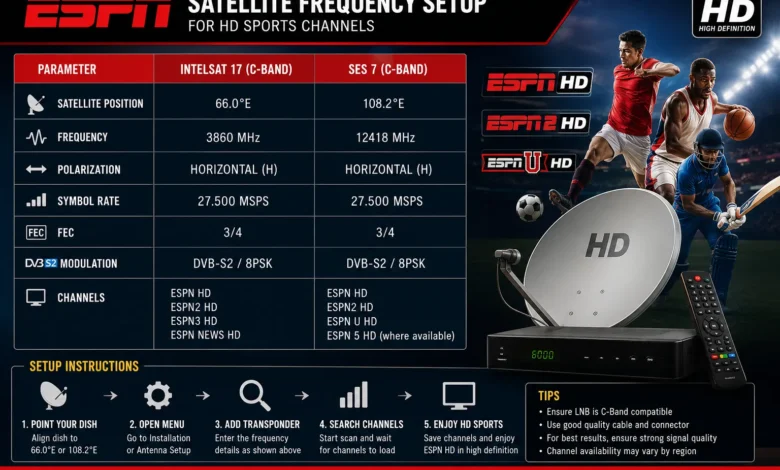
Below are the commonly used ESPN satellite frequency details for 2026. Keep in mind that frequencies may vary depending on your region and satellite provider.
ESPN Frequency on Satellite
| Channel | Satellite | Frequency | Polarization | Symbol Rate | Quality |
|---|---|---|---|---|---|
| ESPN HD | Intelsat | 12640 | Horizontal (H) | 30000 | HD |
| ESPN Sports | SES | 11054 | Vertical (V) | 29900 | HD |
| ESPN America | Astra | 11778 | Vertical (V) | 27500 | HD |
Important: Always verify the latest frequency with your local satellite provider because settings may change throughout the year.
How to Add ESPN Frequency Manually
If ESPN channels disappeared from your receiver, don’t worry. You can manually add the frequency in just a few minutes.
Step-by-Step Setup Guide
1. Open Receiver Settings
Using your remote control:
- Press Menu
- Go to Installation
- Select Satellite Settings
2. Choose the Correct Satellite
Select the satellite where ESPN is broadcast in your region.
Examples include:
- Astra
- Intelsat
- SES
- Eutelsat
3. Enter Frequency Information
Input the following details carefully:
- Frequency
- Polarization
- Symbol Rate
Double-check each number before saving.
4. Start Channel Scan
Choose either:
- Blind Scan
- Manual Scan
- Network Search
Your receiver will search and install available ESPN channels automatically.
5. Save the Channels
Once scanning finishes:
- Save changes
- Exit settings
- Open ESPN to test signal quality
Common ESPN Signal Problems and Fixes
Sometimes the issue isn’t the frequency itself. Several small technical problems can affect reception.
Weak Signal Quality
This usually happens because of:
- Poor dish alignment
- Bad weather
- Damaged cables
- Old LNB equipment
Quick Fix:
Re-align the satellite dish slightly and check cable connections.
ESPN Channel Not Showing
If the channel disappears completely:
- Re-scan channels
- Update transponder information
- Restart your receiver
Many viewers solve the issue simply by performing a fresh blind scan.
HD Channels Freezing
Freezing or lag often happens because the signal strength is too low.
To improve stability:
- Use a larger satellite dish
- Upgrade your LNB
- Avoid splitters when possible
Best Satellite Receivers for ESPN Channels
Not all receivers handle HD sports broadcasts equally. If you regularly watch live sports, investing in a modern receiver can make a huge difference.
Features to Look For
A good receiver should support:
- Full HD or 4K
- DVB-S2 technology
- Fast channel scanning
- Strong signal processing
- USB recording
Popular receiver brands often used by sports fans include:
- Starsat
- Tiger
- Geant
- Dreambox
Modern receivers also improve channel switching speed and reduce signal drops during live events.
Tips for Better ESPN Viewing Experience
Watching sports should feel smooth and immersive. Here are a few practical ways to improve your setup.
Optimize Dish Position
Even a tiny dish movement can improve signal quality dramatically.
Professional installers often use signal meters for precise alignment.
Use Quality Coaxial Cables
Cheap cables lose signal strength over time.
Choose:
- Copper-core cables
- Weather-resistant connectors
- High-shield coaxial cables
This becomes especially important for HD sports broadcasts.
Update Receiver Software
Many users forget this step.
Firmware updates can:
- Improve scanning performance
- Fix bugs
- Increase compatibility with new frequencies
Check your receiver manufacturer’s website regularly.
ESPN Sports Coverage in 2026
One reason ESPN remains so popular is its massive sports lineup.
Depending on your region and package, ESPN may broadcast:
- UEFA competitions
- NBA games
- NFL coverage
- Tennis tournaments
- UFC events
- MLB games
- College sports
Sports broadcasting continues evolving rapidly in 2026, with more viewers expecting HD and 4K quality as standard.
Is ESPN Available for Free on Satellite?
This depends entirely on your region and provider.
In many cases:
- Some ESPN feeds are encrypted
- Others may appear temporarily free-to-air
- Official subscriptions provide stable access
Be cautious with unofficial streaming methods because they may offer unreliable quality or legal risks.
ESPN Frequency vs Online Streaming
Satellite TV is still popular, but streaming services are growing fast.
Here’s a quick comparison:
| Satellite ESPN | Online Streaming |
| Stable for live sports | Requires fast internet |
| Better for large TVs | More mobile-friendly |
| Works without buffering | May lag during peak times |
| One-time equipment setup | Monthly subscriptions |
Many sports fans now combine both methods for flexibility.
How Often Do ESPN Frequencies Change?
There’s no fixed schedule.
Broadcasters may update frequencies because of:
- Satellite upgrades
- Technical optimization
- Bandwidth changes
- Regional broadcasting rights
That’s why many satellite enthusiasts regularly follow frequency update websites and forums.
Final Thoughts
Keeping up with the latest ESPN Frequency in 2026 is essential if you want uninterrupted access to live sports and HD broadcasts. Fortunately, updating your receiver settings only takes a few minutes once you know the correct frequency details.
Whether you’re preparing for football season, NBA playoffs, or major international tournaments, having a properly configured satellite setup ensures you never miss the action.
As sports broadcasting technology continues improving, viewers can expect even better picture quality, stronger signals, and wider coverage in the years ahead.
FAQ About ESPN Frequency
What is the latest ESPN Frequency for 2026?
The latest ESPN Frequency depends on your satellite provider and region. Common settings include frequencies on Astra, Intelsat, and SES satellites.
Why is my ESPN channel not working?
Possible reasons include:
- Outdated frequency
- Weak satellite signal
- Incorrect dish alignment
- Receiver software issues
A manual scan usually solves the problem.
Can I watch ESPN in HD on satellite?
Yes. Most modern ESPN broadcasts are available in HD, provided your receiver supports DVB-S2 and HD decoding.
Do ESPN frequencies change often?
Not very often, but occasional updates happen because of satellite or broadcasting adjustments.
What receiver is best for ESPN channels?
Receivers supporting DVB-S2, Full HD, or 4K generally provide the best sports viewing experience.