Satellite Signal Tracking: The Smart Guide to Stronger Reception and Better TV Signals

There’s nothing more frustrating than watching your favorite channel only to lose signal right when the action starts. Whether you’re setting up a satellite dish for the first time or trying to improve weak reception, understanding satellite signal tracking can completely change your viewing experience.
The good news? You don’t need to be a professional technician to get better results.
With the right methods, tools, and a little patience, satellite signal tracking becomes surprisingly simple. In this guide, we’ll break down how it works, why it matters, and how you can maximize your satellite signal quality like a pro.
What Is Satellite Signal Tracking?
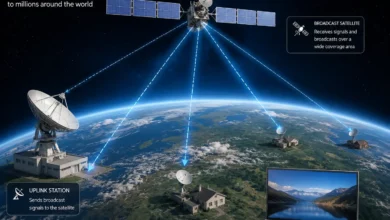
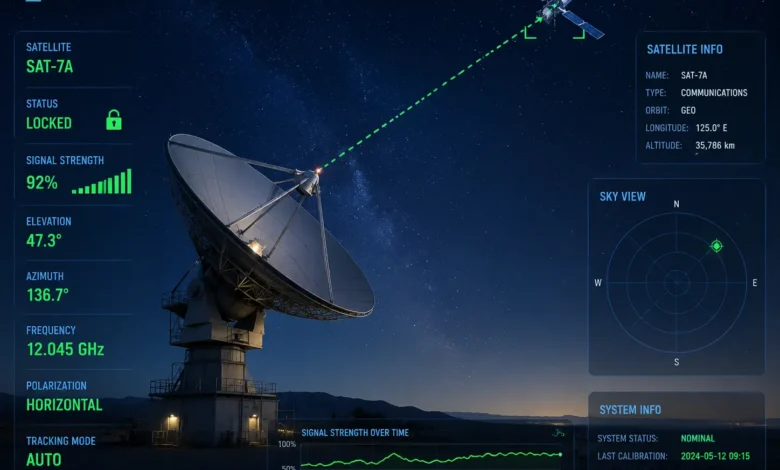
Satellite signal tracking is the process of locating, aligning, and maintaining the strongest possible connection between a satellite dish and a communication satellite orbiting Earth.
In simple terms, it helps your dish “lock onto” the correct satellite so you can receive stable TV, internet, or radio signals.
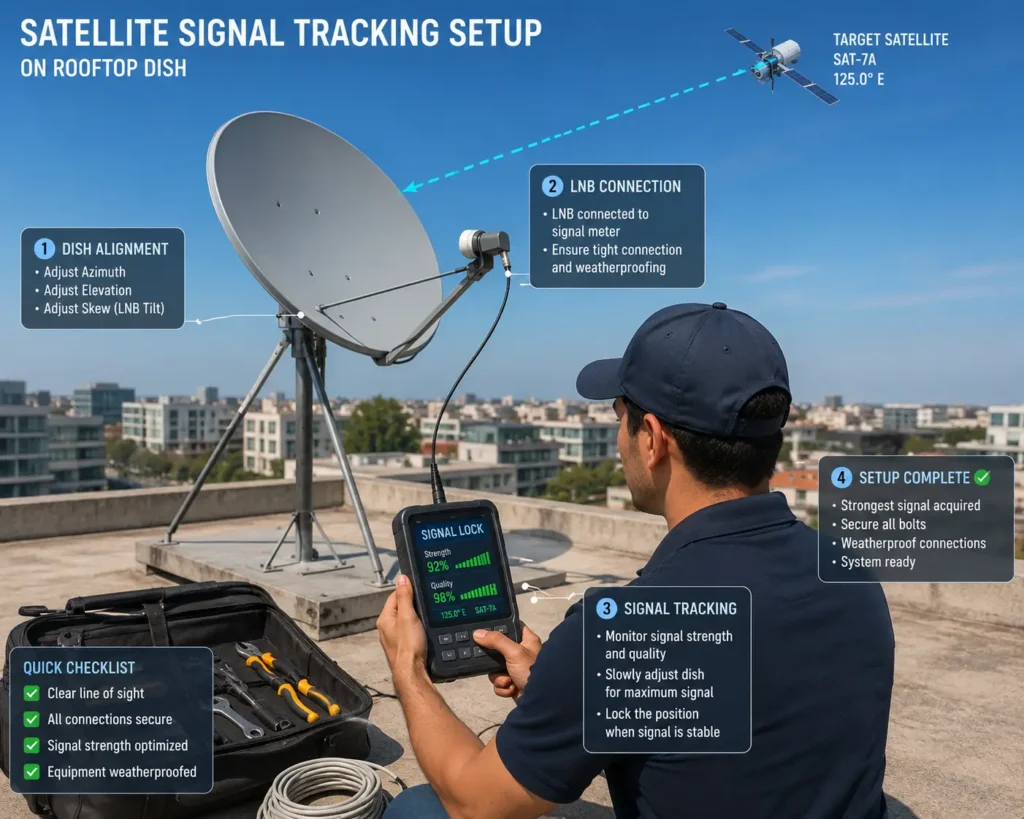
This process involves adjusting several factors:
- Dish direction (azimuth)
- Vertical angle (elevation)
- LNB positioning
- Signal strength monitoring
- Weather and obstacle management
Modern satellite receivers often include built-in signal tracking tools, making the process easier than ever.
Why Satellite Signal Tracking Matters
A properly tracked satellite signal doesn’t just improve picture quality. It also prevents common issues like:
- Signal drops during bad weather
- Channel freezing
- Pixelation
- Missing frequencies
- Weak HD broadcasts
Even a tiny misalignment can dramatically reduce signal quality.
That’s why professional installers spend so much time fine-tuning dish positioning.
How Satellite Signal Tracking Works
To understand the process better, imagine shining a flashlight at a tiny target located thousands of kilometers away in space.
That’s essentially what your satellite dish is doing.
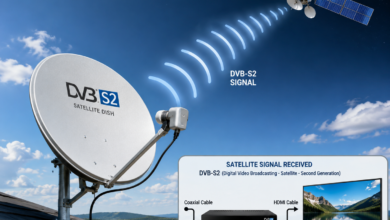
The dish receives signals transmitted from a satellite and reflects them toward the LNB (Low Noise Block converter). If the alignment is even slightly off, signal quality drops immediately.
The Main Elements of Signal Tracking
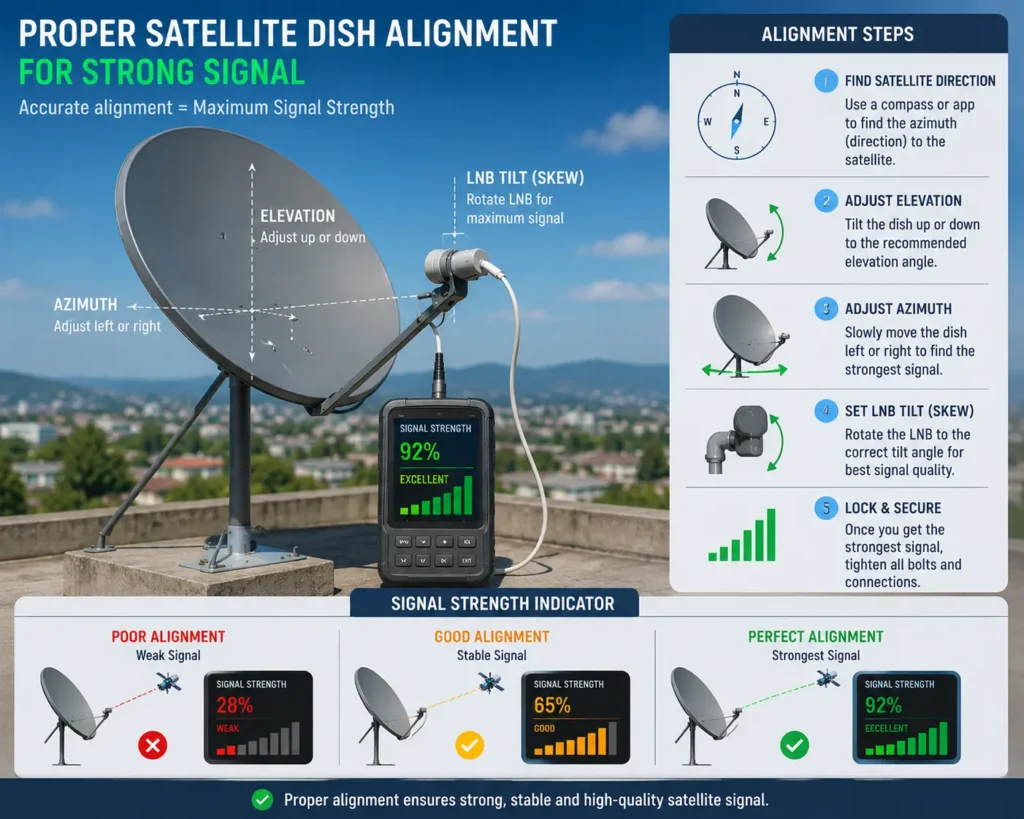
1. Azimuth Adjustment
Azimuth refers to the horizontal direction of the dish.
You rotate the dish left or right until it points toward the correct satellite position.
2. Elevation Adjustment
Elevation controls the upward or downward angle.
Different countries and regions require different elevation angles depending on satellite location.
3. LNB Skew
The LNB must sometimes be rotated slightly to match the satellite polarization.
This small adjustment can significantly improve signal quality.
4. Signal Strength and Quality
Most satellite receivers display:
- Signal Strength
- Signal Quality
Quality is usually more important than raw strength because it reflects how accurately the dish is aligned.
Essential Tools for Satellite Signal Tracking
The right tools make tracking much easier and faster.
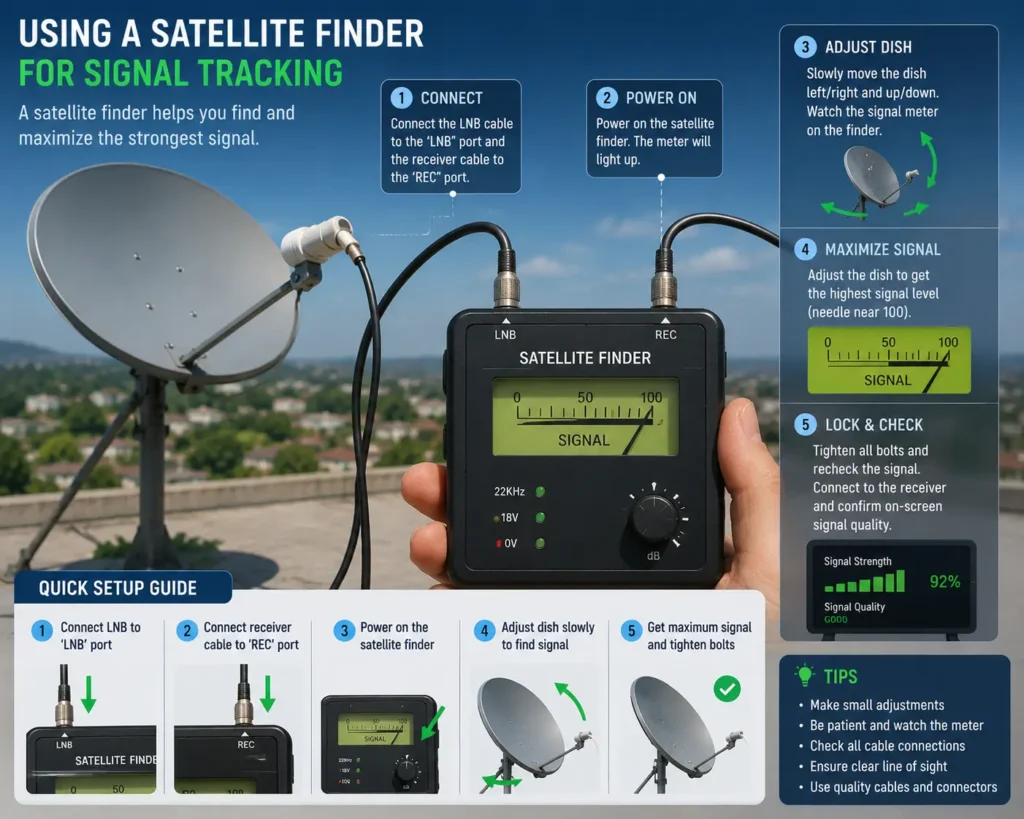
Satellite Finder Meter
A satellite finder is one of the most useful devices for beginners and professionals alike.
It helps identify when the dish is aligned correctly by displaying signal intensity.
Mobile Satellite Tracking Apps
Modern smartphone apps can help locate satellites using GPS and augmented reality.
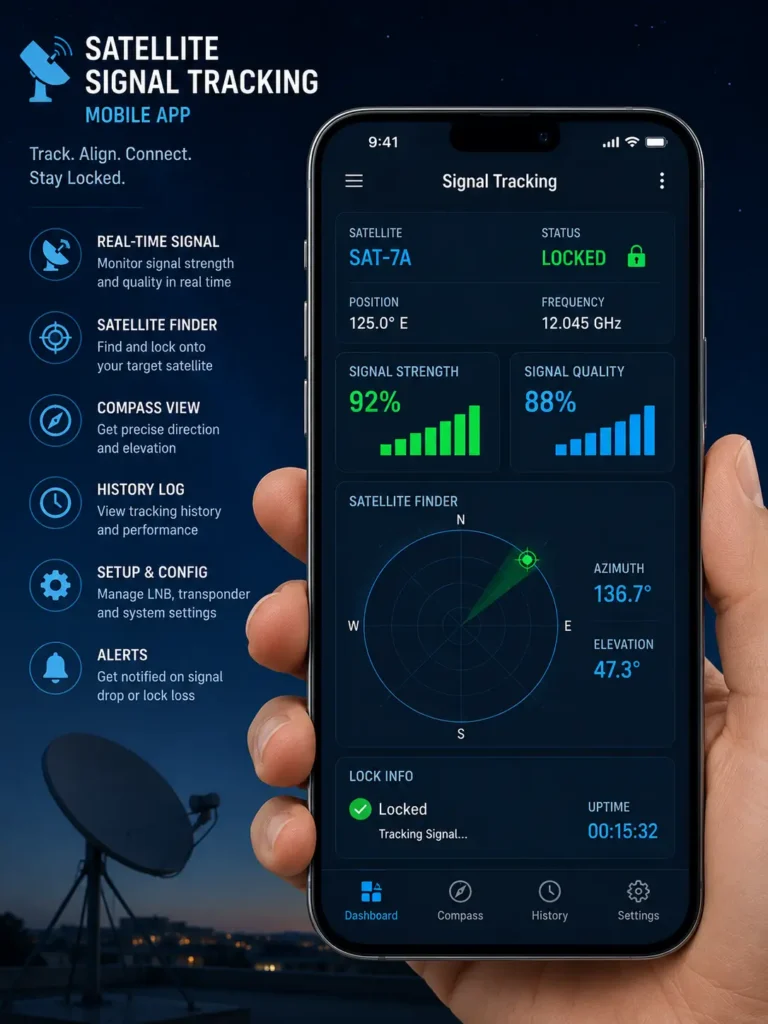
Popular features include:
- Satellite direction maps
- Real-time positioning
- Dish alignment assistance
- Signal optimization guides
These apps are especially useful for DIY installations.
Compass
A basic compass still plays an important role when manually aligning dishes.
It helps determine the correct azimuth direction before fine adjustments begin.
Signal Monitoring Receiver
Many modern satellite receivers provide live signal bars and frequency scanning tools.
These features help optimize tracking without needing expensive equipment.
Common Causes of Weak Satellite Signals
If your signal constantly disappears or becomes unstable, several factors may be responsible.
Bad Weather
Heavy rain, storms, and snow can weaken satellite signals temporarily.
This phenomenon is known as “rain fade.”
Dish Misalignment
Strong winds or poor installation can slightly move the dish over time.
Even a small shift may reduce signal quality.
Obstacles Blocking the Signal
Trees, buildings, or walls between the dish and satellite path can interfere with reception.
Always ensure a clear line of sight.
Damaged Cables or Connectors
Old coaxial cables and loose connectors often create signal loss.
Inspect them regularly.
Step-by-Step Satellite Signal Tracking Guide
If you want better reception, follow these practical steps.
Step 1: Find the Correct Satellite Position
Use a satellite tracking app or online satellite calculator to locate:
- Azimuth angle
- Elevation angle
- LNB skew
Enter your location and satellite name for accurate values.
Step 2: Position the Dish Roughly
Point the dish toward the estimated direction using a compass.
Don’t tighten the bolts completely yet.
Step 3: Connect the Satellite Finder
Attach the finder between the receiver and the LNB.
Slowly move the dish until the signal increases.
Step 4: Fine-Tune the Alignment
Move the dish in tiny increments.
Pause for a few seconds after each movement because receivers may take time to react.
Focus on maximizing signal quality rather than strength alone.
Step 5: Adjust the LNB
Rotate the LNB slightly to improve signal polarization.
This step is often overlooked but can make a noticeable difference.
Step 6: Secure Everything
Once the signal reaches its best level:
- Tighten all bolts
- Protect connectors from moisture
- Recheck signal quality
Best Tips to Improve Satellite Signal Tracking
Want professional-level results? These tips help a lot.
Install the Dish in an Open Area
Avoid placing the dish near:
- Trees
- Metal structures
- Walls
- Power lines
Clear visibility is essential.
Use High-Quality Cables
Cheap cables often reduce signal performance over time.
Investing in quality coaxial cable improves reliability.
Regularly Clean the Dish
Dust, bird droppings, and snow accumulation can weaken reception.
Simple maintenance keeps signals stable.
Recheck Alignment After Storms
Strong winds can slightly rotate the dish.
If channels suddenly disappear, alignment should be inspected first.
Satellite Signal Tracking for Different Applications
Satellite tracking isn’t limited to television.
It’s also widely used for:
Internet Services
Satellite internet providers rely heavily on accurate tracking for stable speeds.
Marine and RV Systems
Mobile satellite systems automatically track satellites while moving.
These systems are common in:
- Boats
- RVs
- Trucks
- Outdoor camping setups
Broadcasting and Communications
TV broadcasters and communication companies use advanced tracking systems to maintain uninterrupted transmission.
The Future of Satellite Signal Tracking
Technology continues evolving rapidly.
New satellite tracking systems now include:
- AI-assisted alignment
- Automatic motorized dishes
- Smart signal optimization
- Real-time weather compensation
As satellite communication becomes more advanced, tracking systems are becoming easier for everyday users.
Even beginner setups now offer features that once required professional equipment.
Final Thoughts
Learning satellite signal tracking can save you time, money, and endless frustration.
The difference between a weak unstable signal and crystal-clear reception often comes down to small adjustments and proper alignment.
Whether you’re installing a new dish, fixing signal issues, or simply improving channel quality, mastering the basics of satellite tracking gives you much better control over your setup.
And once you understand the process, it becomes far less intimidating than most people think.
FAQ About Satellite Signal Tracking
What is the best tool for satellite signal tracking?
A satellite finder meter is usually the easiest and most effective tool for accurate dish alignment.
Can weather affect satellite signals?
Yes. Heavy rain, storms, and snow can temporarily weaken satellite reception, especially during severe weather conditions.
How do I improve weak satellite signal quality?
You can improve signal quality by:
- Re-aligning the dish
- Checking cable connections
- Removing obstacles
- Adjusting the LNB skew
- Using better-quality cables
Are satellite tracking apps accurate?
Most modern apps are surprisingly accurate when combined with proper manual adjustments and GPS positioning.
Why does my satellite signal disappear at night?
This may happen because of temperature changes, loose connections, dish movement, or equipment issues affecting signal stability.